
Your cart
There are no more items in your cart
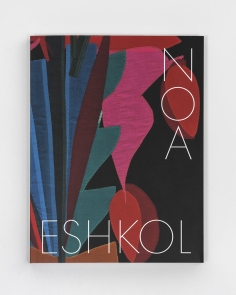
Noa Eshkol (1924–2007), born on Kibbutz Degania Bet, was a leading figure in modern dance in Israel. In the 1950s, she developed, together with Avraham Wachman, the revolutionary movement notation system known as Eshkol-Wachman Movement Notation (EWMN). In 1951, she founded the Chamber Dance Quartet to perform her choreographies based on this notation. Her pieces, danced without music but to the sole rhythm of a metronome, are distinguished by their precision, their simplicity, and the emphasis placed on the collective. The Yom Kippur War in 1973 marked a decisive turning point in her artist career. Eshkol then put an end to her choreographic practice to turn, along with her dancers, to the creation of Wall Carpets—large textile pieces made from used fabrics and clothing. Without rules or theory, she created a body of nearly two thousand works blending abstraction, landscape, and still life. These wall carpets, produced over nearly thirty years, establish her as one of the most prolific and innovative artists of the 20th century, now being rediscovered by a new generation of artists and collectors.